Showing posts with label Michelangelo. Show all posts

Saturday, 1 February 2014

F#####G CENSORED!


The right to freedom of speech of one of those inalienable ones, until someone says something we disagree with, for whatever reason. Americans have it as their First Amendment, for all we seem to hear more about the Second one. The ability to speak one's mind without fear of punishment is something that many of us in the UK and the US take for granted, I suspect. Every now and then there will be a news story from China or similar that makes us draw a sharp breath in shock, though usually this particular right is one we don't even think about. But do we really have that right?

Some censorship may make sense. Child pornography, for example, should be censored out of existence, along with its disseminators. The protection of military secrets rather depends on your view of the need for a military. Other censorship, such as that described as 'political correctness', seems overly nanny-like. And don't get me started on groups such as the American 'Focus on the Family'.
                                                    http://images1.wikia.nocookie.net/__cb20110617053647/simpsons/images/1/1b/The_First_Amendment_does_not_cover_burping..jpg

The real trouble with censorship is that half the time, you probably don't know whether what you're seeing/reading/hearing has been censored. I don't mean just the self-censorship, the 'I probably shouldn't say that about my boss because I still need my job' type comments. It's the stuff the government thinks we can't bear to know or won't understand or will misinterpret (thanks for that vote of confidence in our intelligence, by the way). It's the super-injunctions, when various celebrities persuade the courts not only to keep their identities and court-cases secret, but also to keep the secret a secret. It's the decision by someone *higher up* that certain reading matter is subversive and therefore should not be circulated ('higher up' being a relative term here, not a mystical one).

Before the printing press, subversive material was limited in quantity but it didn't stop its existence. Subversion leads to discontent which leads to either rebellion and/or censorship. Socrates was made to drink hemlock because he had promoted philosophies that the ruling class of the day disliked, and that was some considerable time ago. Once Europe got its hands on that movable type, there was no stopping the pesky subversives - so the Catholic Church came up with an Index of Forbidden Books. Pope Alexander VI (the Borgia Pope) had tried to prevent unlicensed books being published back in 1501 but it wasn't until 1559 that the Index was first created, under the auspices of Pope Paul IV, the driving force behind the Roman equivalent of the Spanish Inquisition. (A stubborn man, he only accepted the papacy in 1555 because the Holy Roman Emperor Charles didn't want him to - or so we are told.)  Although the Index was refined later by the Council of Trent, authors could still be put on it simply because their views were deemed 'heretical', even if the subject matter of the book was not. Kepler, Kant and Newton were all forbidden in the Papal States and many Catholic countries courtesy of the Index.
                                                        

Official censorship via the Index was finally ended in 1966 by Pope Paul VI although the man in charge of the Holy Office (formerly 'The Sacred Congregation of the Index') at the time, one Cardinal Ratzinger, said, "The Index retains its moral force despite its dissolution." Yeah, him.

Michelangelo had no reason to like Paul IV - practically his first act as pope was to cancel Michelangelo's pension - but I suspect his outspoken manner would have also turned him against a man who was keen on censorship to the point of burning offenders at the stake. At least we don't burn people at the stake anymore for abusing their right to a freedom of speech. Or do we?....

Monday, 17 December 2012

Whence inspiration?


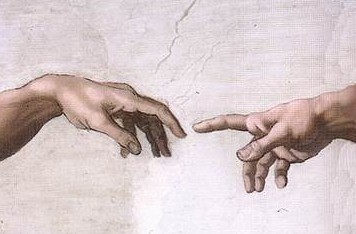
Five hundred years ago, rather than hitting the markets for last minute Christmas shoppings, the citizens of Rome were queuing round the block to see a work of art that had taken its creator four years to complete.

Michelangelo was originally recruited by Pope Julius II to create his tomb, but hardly had the work started and the pope changed his mind: he wanted the ceiling of his uncle's chapel repainting instead. Michelangelo might well have been surprised at the new commission. Not only had he had vast quantities of marble shipped from Carrera already to begin the mammoth undertaking of the pope's tomb, but his reputation was already established as a sculptor, not a painter. Apprenticed in Florence to a workshop that did a lot of fresco work, he had been spotted by Il Magnifico Lorenzo de'Medici for a small figure he had sculpted, and proceeded to make his name with the Pieta in St Peter's in Rome and the rescue of the David in Florence. He was not well-known for painting.
photo from Wikipedia

Now the image of God's hand reaching out to touch Adam's fingers is known around the world. Queues of international pilgrims form outside the Vatican Palace to see the ceiling and although Michelangelo's David is well-known, it is actually a replica that is surrounded by camera-laden tourists in the Piazza Signoria, while the original statue is unphotographable in the Accademia a few blocks away.  
Not the real David, 'just' a life-size replica.


I think he would have fumed about this shift in perception. He signed all his letters 'Michelangelo, sculptor'. It was a constant source of irritation to him when painting the ceiling that all that marble was sitting untouched, yet thirty years later he was back in the chapel, painting the altar wall. This time he included himself, a flayed face reflecting how tortured he felt. The additional insult for a fierce Florentine to be trapped in Rome must have been almost unbearable. Thank goodness for his sanity he had some good Roman friends in Tomasso di Cavalieri and the lady Vittoria Colonna. Subsequent popes only added to his burdens; it is no wonder that he had little respect for some of them.

This was the starting point for my novel Moses in Chains, now out on kindle. A Florentine who lived in Rome for most of his life, a staunch republican who nevertheless had deep respect for and attachment to the Medici family, a devout man who struggled with his own emotions and fled after one of Savonarola's more fiery speeches, a witty man who wasted no time if he thought others were wrong, a stubborn man, a genius, the Divine Michelangelo. Of course his servants would worship him. Wouldn't they?

Friday, 7 December 2012

What I Have Learned About E-Publishing

After five and a half long long years, I have finally released my novel about Michelangelo, Moses in Chains,  onto the usual unsuspecting world. I had hoped in my innocence to get my first novel published via the traditional route, but as time went on, I realised that was not going to happen, so I eventually self-published, at the moment just on Kindle.

I could perhaps have persevered, trying to find an agent and then hoping they could find a publisher, but I wanted to publish in 2012 as a marketing hook, which I haven't yet used, is that Michelangelo finished painting the Sistine Chapel ceiling, a theme in the book, in  1512, and it is therefore the 500th anniversary. Once I realised that the time it would take from finding an agent to being on the shelves of my local bookshop would lead to publication sometime in 2015, if I was lucky, I decided I would have to self-publish. Other people have done it and there is so much advice on the web it couldn't be that difficult. Could it?

The first thing I learned is that the formatting of your text, if it is to go on kindle, is quite specific and you need to set it up in styles, if you're using Word. Unfortunately for me, 'styles' means either italic or non-italic. Since my novel, all 135,000 words of it, is in two voices, one italicised, one not, as soon as I changed my 'normal style' to have a 10 point space at the end of each paragraph, I lost all the italics. Cue going through the book, re-introducing the italicisation. My recommendation? Set up 'styles' before you start.

The next thing I learned is that I am very old-school. I learned to type on a typewriter (yes, I really *am* that old) and was taught to put two spaces at the end of a sentence. Kindle texts cannot cope, apparently, with two spaces at the end of a sentence, they like one. Cue 'show all formatting marks' and go through again, taking out extraneous spaces. To be fair, I could have done a global 'find and replace' with instructions I found on this website which is accurately named 'easy as pie', but of course I also needed to take out extra paragraph marks, spaces at the beginning of paragraphs and other 'clutter'. I think I made the right decision, even though it did take me over a month to go through with the screen set to 130%.

Once I had finished the cleansing process, it was time to set up my kindle author's account. According to Amazon's website, this can take as little as five minutes. After two hours, I have come to the conclusion that this can only possibly be true if you have a US bank account. For those of us not so blessed, you will need you IBAN and your BIC numbers so that they can pay you. Perhaps not all banks are the same, but our bank's website suggested popping in to the branch that holds the account, which was not an option. Fortunately, after rifling through some very old paperwork for something else, my husband located the numbers I needed. So my advice would be, if you think you might like to put something up on kindle any time in the next decade, contact your bank now.

The other irritatingly time-consuming problem I had was entering my phone number. It really really wanted it, and wouldn't accept the account without it. But how to format the phone number? Should I assume that it would need the international code in front? Sadly, looking through the support forum FAQs was no use, as searching for 'format phone number' yielded far too many irrelevant results to be of any help at all. Eventually, trial and error led me to discover that it doesn't need an international code, it just wants the area code and the number. Without a space between them.

To be fair, there is loads of help out there. Talli Roland regularly posts articles on her blog and links to The Writer's Guide to e-Publishing, which in addition to the other two sites already mentioned, was brilliant. There were other sites I found and skimmed over but those were the main ones. You may find others have a style that appeals more to you. I haven't yet found one that analyses the pros and cons of the 35%/70% royalty decision so if anyone sees one somewhere, please let me know!

In the meantime, my jolly read is out there now. Here's the link in case you like the idea of a book in which a grumpy old Renaissance Man watches paint dry servant tries to look after Michelangelo's memoirs of painting the Sistine Ceiling while failing to cope with the various women in his life. If nothing else, you might like the artwork. :-)